Everyone is different, what personally connects you with horror?
Horror honestly saved me in middle school. In 7th grade I was running with the wrong crowd, getting into trouble, and carrying around a lot of anger I didn’t know how to process. Then one Saturday night I stumbled onto Night of the Living Dead (the original 1968 movie) on TV, and it completely floored me. Something clicked. I picked up a Super 8 camera and started trying to recreate the images and energy I saw in horror films.
For me, horror is an outlet — a space to explore fear, chaos, and the things society pushes into the shadows. It’s still the genre where I feel the most free to dig into taboo ideas and the ironies of human truths.
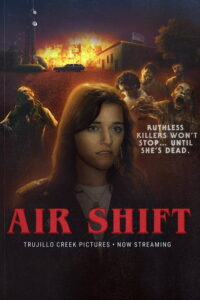
Why is this movie, AIR SHIFT, important for you to make?
I’ve always been fascinated by radio personalities — these unseen voices who can feel so powerful and intimate. When FM radio faded in favor of digital formats, I found myself really missing that world. AIR SHIFT became my way of reconnecting to it.
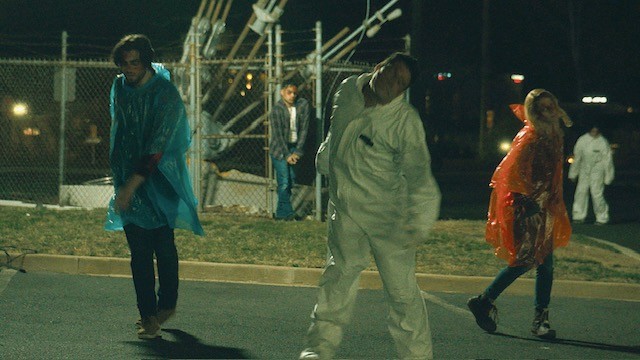
I loved the idea of a deejay whose sanctuary suddenly becomes a trap when a serial killer hears her on the air and hunts her down. And once I layered in the zombie subplot, the film took on a wild, unexpected energy that felt too fun not to explore.
For me, AIR SHIFT is a love letter to the FM radio era — with zombies crashing the party.
From Script to Screen, How close is the original vision of AIR SHIFT?
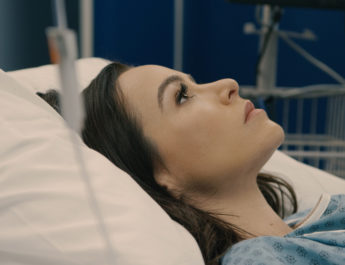
I’d say about 90% of the original AIR SHIFT script made it to the final cut. The character relationships are very close to what was on the page. We had to pivot from a rural radio station to a more urban one due to location limitations, but the overnight atmosphere remains the same. We also added the newscaster character while shooting—just to ground the audience and confirm that everything unfolding is real, not a product of Lisa’s imagination.
What was the greatest obstacle that you needed to overcome making AIR SHIFT?
The biggest challenge on AIR SHIFT was juggling multiple responsibilities. Without much on-set producing support, I found myself handling many of those duties while also directing. Like many indie filmmakers, time and budget were constant hurdles—but we pushed through and made it work.
Can you tell your proudest moments while making AIR SHIFT?
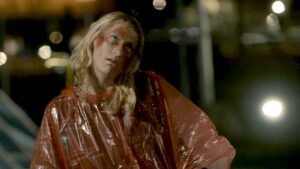
One of my proudest aspects of AIR SHIFT is the cast. Three of our five leads were coming in from out of town, and we had very little time to rehearse—yet everyone showed up fully aligned with the story and the tone. We shared a clear vision of how each character would help turn this into the worst night of Lisa’s life.
My single proudest moment came during the scene where Lisa is attacked by a zombie in the air studio. It unfolded almost exactly as I imagined it when writing the script. The performances, editing, makeup, and music all locked together in a way that felt incredibly satisfying. I was also blown away by Margarita Gamarnik’s live singing. Every performance was done in a single long take, and she delivered each one flawlessly.
What are three ingredients that make a good horror movie?
1. A central character whose fate genuinely matters to us.
2. A threat that feels bigger, stranger, or more powerful than anything human.
3. Well-placed shocks—whether through gore, tension, or surprise—that keep the audience off-balance.
What lessons have you learned as an indie filmmaker?
I’ve learned that indie filmmaking is all about maximizing what you have. Start with the strongest script you can, surround yourself with skilled collaborators, and cast actors who elevate the material. After that, you hope the film resonates with audiences in the way you envisioned.
Is watching movies in theaters still important?
Absolutely. I recently revisited Close Encounters of the Third Kind in a nearby theater, and the audience ranged from teenagers to people in their sixties. Hearing younger viewers gasp and whisper “Oh… wow” as they connected with the film reminded me how powerful the shared theatrical experience really is. I also remember seeing Alien with a packed crowd—the screams were unreal. That kind of communal adrenaline is contagious. Movie theaters amplify everything we love about cinema, and I hope they’re always part of the experience.
It’s hard for indie films to make money, what’s the answer?
The truth? Indie films survive by being smart, not big. Keep the concept tight enough that you can execute it at a high level, don’t spend money you’ll never get back, and really vet distributors—there are plenty of sharks in those waters. And when it’s time to market, lead with a hook. Horror fans want to know: Why must I see this right now?
What’s on your filmmaking horizon?
Next up, I’m developing a horror/thriller with sci-fi overtones, set in the future aboard a space station. The story centers on a young woman who finds out her DNA has been used to create a dangerous and destructive being. I hope it’s a tense, terrifying ride for audiences.
AIR SHIFT is currently available to stream on Amazon Prime: https://www.amazon.com/dp/B0FQ2LFRDG/ref=cm_cr_arp_d_btm?ie=UTF8