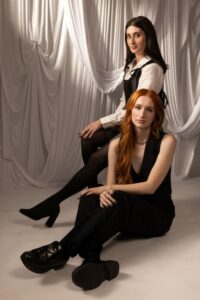
Black Ribbon Productions is carving out a space for horror, sci-fi, and alternative storytelling with a focus on bold creative voices, unconventional ideas, and stories that deserve to be seen. Founded by Brooke Becker and Delaney Sharpe, the company’s first project, The Veil Chapter One: Roadkill, launches an anthology micro-horror series designed specifically for YouTube, blending psychological horror, striking visuals, and contained storytelling. In this interview, Becker and Sharpe discuss the inspiration behind Roadkill, turning the limitations of a single-location story into a source of tension, their plans to expand The Veil into new corners of the genre, and why they believe horror is entering an exciting era for original and underrepresented voices. The Veil Chapter Two: Ophelia is also now available to stream.
You’ve described Black Ribbon Productions as a home for horror, sci-fi, and alternative storytelling. What kinds of stories or ideas immediately make you say, “That’s a Black Ribbon project”?
Brooke: Both Delaney and I are interested in gothic, psychological horror and odd projects–something with a unique perspective and twist. We want to create and support projects that shine a light on underrepresented voices through these genres. Taking chances on filmmakers who have a strong creative voice but who haven’t been given opportunities through traditional channels is important to us.
The Veil Chapter One: Roadkill is the first installment in an anthology. What made the anthology format appealing to you, and how connected will the different chapters be?
Brooke: We knew that we were creating The Veil for YouTube from the beginning, so we wanted to differentiate our channel from other horror channels that often exclusively post short films. An anthology micro-horror series can continue for years, which we anticipate will increase in scope and episode volume as we grow. We wanted to create a TV show for horror and sci-fi fans without the barrier of subscription platforms.
What can horror fans expect from the world of The Veil as the anthology continues? Will each chapter explore a different type of horror?
Delaney: At present, each Episode consists of three Chapters. From chapter to chapter, fans can expect to find repeated motifs, intertwining storylines, and maybe even returning characters. From episode to episode they can expect that same attention to story, atmosphere, production value, and, of course, scares. As we grow the company, we hope to grow the series as well, allowing us to take even bigger creative swings and finding new ways to surprise and unsettle our audience.
Was there a particular horror movie, filmmaker, or piece of genre storytelling that influenced Roadkill?
Brooke: I’m definitely inspired by the visual styles of Mike Flanagan, Guillermo Del Toro, and Tim Burton in general. Roadkill is our introductory chapter to set our tone and world, and future chapters will bring in additional dark, whimsical, and terrifying elements.
For Roadkill specifically, I pulled a lot of reference shots from the cinematography of The Haunting of Hill House, Euphoria, and Wednesday. These shots were helpful visual references for our storyboards and our cinematography, as well as the overall feeling of the script.
Roadkill has a contained premise, but those kinds of stories can create an incredibly intense experience. How did you use the limitations of the setting to your advantage?
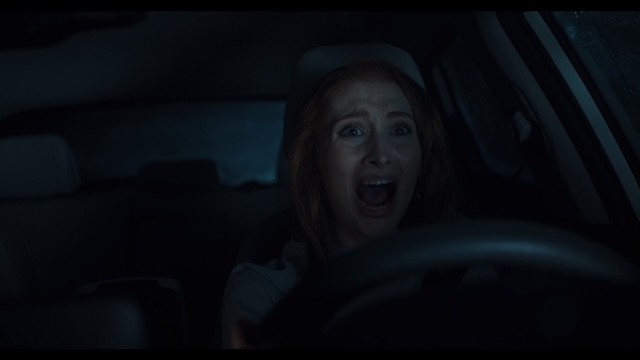
Delaney: We knew we were going to be telling this story from a single location, primarily inside a car, and in only a couple of minutes. Rather than approaching the constraints as hindrances, this was a challenge that we gave ourselves. It became a bit of a game to see just how much of a complete story we could tell, how much tension could be built, how fully we could bring this character to life.
The car is a useful device from a horror perspective: there’s nowhere for the driver to go. She is trying to get home and there is an obstacle in her way. Driving alone on a dark and empty road can feel incredibly isolating. You never know what might be hiding just outside the reach of your headlights, or, in this instance, who might be coming up directly ahead. We were able to use the windows, the mirrors, and radio as different ways of revealing the world around her. In that sense, the setting became less of a limitation and more of a tool for creating tension.
Brooke, as a director, how do you balance paying homage to the horror films you love while still trying to bring your own voice to the genre?
Brooke: I think that every horror film or show is an homage to many before it, while hopefully bringing an original twist. Most well-known horror and sci-fi directors are historically men, and I’d like to bring my unique taste and lived experience to the work I create and the stories we tell as a company. I also like bringing in inspiration from non-horror film and literature into my work.
Delaney, horror performances often require actors to react to things that aren’t actually there or situations that are created piece by piece during filming. What was that experience like on Roadkill?
Delaney: So much of acting is ultimately an exercise in imagination; horror just requires an extra touch of it. With Roadkill, the majority of what Lexi is reacting to is either auditory (and added in post-production) or outside of frame. The goal was to just stay present and only “know” what Lexi knows at a given moment, reacting as if these deeply unsettling things are happening to her for the very first time. In a way, you are creating part of the horror in your own mind and then trying to let the audience have that experience through your reaction.
Without giving too much away, is there a particular moment in Roadkill that you’re especially excited for horror fans to see and react to?
Brooke: I think that our ending is an impactful moment that leaves the door open for our next chapter. We used a combination of practical and VFX throughout Roadkill, and I think that our ending moment helps audiences understand the tone they can expect from future chapters and episodes.
What conversations did the two of you have about the tone of the film before shooting began? Were you always on the same page about how frightening or unsettling you wanted it to be?
Delaney: Surprisingly, I’m actually not sure that any of our conversations ever centered around “how scary do we want this to be?” Brooke and I have been friends for years and we’re pretty aligned in our tastes, so there’s already a shorthand there. Our discussions tend to be more along the lines of “is this cool?” “does this have the right vibe?” or even just “does this feel like us?”
We like to work from moodboards and develop color palettes, and from there we usually have a pretty strong sense of what we are going for tonally. Then it’s about feeling out whether something has the right kind of unsettling quality. If something has the right energy, we can usually recognize that pretty quickly. There’s a lot of trust in that process, so we don’t necessarily have to articulate why something works before we know that it does.
Is there a specific subgenre of horror that Black Ribbon Productions is especially interested in exploring in future projects?
Brooke: We’re looking to create and champion projects across dark and alternative subgenres. The Veil leans into psychological horror, while we plan for upcoming episodes to include gothic horror, body horror, and sci-fi. Currently, we’re in preproduction on Emergence created by and starring Ambar Martinez (The Pitt, 9-1-1) and directed by J. Scott Miller, which is a horror sci-fi short film about A.I in healthcare.
Horror has gone through so many different eras and trends. What do you think is exciting about the genre right now?
Delaney: I think we are moving into an era where audiences are incredibly eager to support original and unconventional stories. Horror fans have always been particularly open to filmmakers taking risks, but I think we are seeing a real embrace of stories that don’t necessarily fit neatly into traditional ideas of what a horror film should be. There’s a real demand for different voices, different approaches, and filmmakers who are willing to experiment with the genre.