
From Los Angeles-based filmmaker & AFI Conservatory graduate Yihong Exa Huang (VICE, I Hate Love, Just Another D…
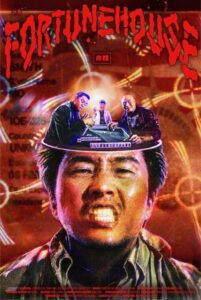
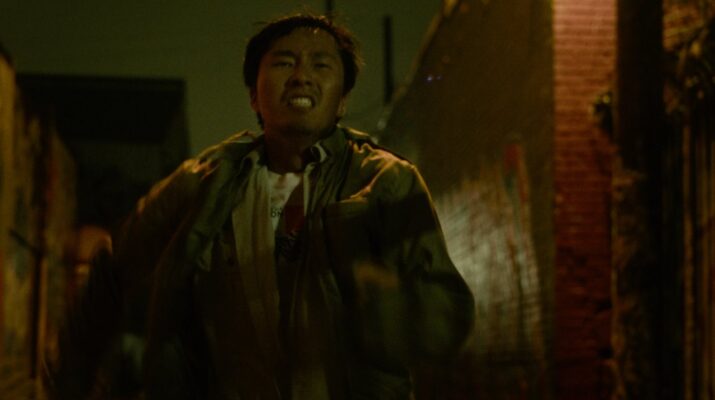
The world premiere screening selected on August 7th at 7:45pm for the Academy Award®-and BAFTA-qualifying LA Shorts International Film Festival, taking place July 30-August 12, 2026, at Regal NoHo West in Los Angeles. “Fortune House” from Los Angeles-based filmmaker & AFI Conservatory graduate Yihong Exa Huang (VICE, I Hate Love, Just Another Day, Stranger in Paradise), offers a magical realist immigration fable as a desperate immigrant delivery driver stumbles into a mahjong parlor run by three demons, where he enters a demon’s deal: win the game, and they will grant him a green card. Blending magical realism with dark humor, the film transforms the anxieties, compromises, and hidden transactions of immigrant survival into a Faustian bargain, asking a single question: when the powerless are forced to negotiate with a system rigged against them, what do they have left to put on the table. This incredible next generation of Asian filmmakers are taking exponential leaps in blending magical realism which audiences and critics embraced wholeheartedly in Everything Everywhere All At Once.
Realizing immigration isn’t a journey with an ending, it’s a perpetual state of flux, a cycle as ruthless as reincarnation itself. “Fortune House” is the filmmakers attempt to dismantle that mythology: to tell a story about people trapped between worlds, about who gets to stay and who gets sent back to hell, and about the systems that profit from deciding. It’s a story about karma, not as spiritual fairness, but as another economy built on desperation, where even your shot at rebirth comes with a price tag.
The team of “Fortune House” is led by Director Yihong Exa Huang (VICE, I Hate Love, Just Another Day, Stranger in Paradise), Co-Written by Jeff Athey & Yihong Exa Huang, Produced by Frances Chiu (Grimrock, The Last Coin, Luxor), and Yihong Exa Huang, Executive Produced by Wei Ding, and starring Forest Lin (Quantum Entangled, The Smell of Sin, Good with Her Hands), Tony Kim (Natural Vice, (God)Mother, Good Grief), Alexandre Chen (Babylon, MacGyver, Star Trek: Picard), Vivian Lee (The Mannequin, Breakdown), and Joel Chang.
Trailer: https://vimeo.com/1211489859?fl=tl&fe=ec

Logline: A desperate immigrant delivery driver stumbles into a mahjong parlor run by three demons, where he enters a demon’s deal: win the game, and they will grant him a green card.
Short Synopsis: Inspired by these historical images, Fortune House reimagines the immigrant experience as a contemporary fable. Set in a near-future Los Angeles, the film follows an undocumented Chinese delivery driver who stumbles into a restaurant run by demons and is forced to gamble for his place in America through a supernatural game of mahjong. Blending magical realism with dark humor, the film transforms the anxieties, compromises, and hidden transactions of immigrant survival into a Faustian bargain, asking a single question: when the powerless are forced to negotiate with a system rigged against them, what do they have left to put on the table
Director Bio: Exa Huang is a Los Angeles–based director and producer whose work explores underground subcultures, immigrant identities, and marginalized communities through a blend of intimate realism and contemporary genre storytelling.
She is a graduate of the American Film Institute Conservatory and previously worked as a director and creative at VICE. She has also worked in development and acquisitions at Valhalla Entertainment (The Walking Dead, Aliens).
Her narrative short I HATE LOVE received support from The Chimaera Project, while her documentary JUST ANOTHER DAY was recognized by the Montreal Independent Film Festival and Independent Shorts Awards. Her documentary STRANGER IN PARADISE screened at queer film festivals in Berlin, Shanghai, and London.
Directors Statement:
Born on an island from southeast China, I remember the summer my father noticed my grandmother’s pension shrinking month after month. Worried she was being scammed, he decided to follow her one weekend. We climbed onto a rickety motorized tricycle from her village, then transferred to a shaky long-distance bus, trailing her deep into the mountains. At the end of a winding dirt road, a temple appeared: gleaming gold, almost garish against the barren hillside. Compared to the rotting wooden shacks dotting the fields nearby, its opulence felt sinister.
We were drenched in sweat by the time we arrived, but my grandmother looked radiant. She walked slowly into the temple, where a towering wall stood embedded with hundreds of small wooden plaques: memorial tablets for the dead. Families paid to inscribe their deceased loved ones’ names in these slots, light lotus lamps, and have monks chant sutras, hoping to clear karmic debts and guide souls smoothly into their next lives.
My grandmother placed her own name in one of the slots. She paid the monks to chant for her in advance: so that when she died, she could skip hell entirely and reincarnate immediately.
My grandma believed her current life had accumulated too much sin. Born into poverty, she’d been forced to slaughter animals with her own hands just to survive. She thought she owed a karmic debt that needed repaying now, before it was too late. Meanwhile, the monks, collecting all this faith, all this desperation, had built the most lavish structure for miles.
That image stayed with me: the gleaming temple, the desperate transactions, the promise of escaping one kind of hell by paying your way through another. Years later, after moving abroad, I began to see echoes of that same system everywhere. For the first time, I experienced what it meant to look like me in a place that treated me differently because of it. The questions started surfacing: Who decides these rules? What kind of karma is this system running on? Where does the cycle end? And where, if anywhere, is home?
I realized that immigration isn’t a journey with an ending, it’s a perpetual state of flux, a cycle as ruthless as reincarnation itself. FORTUNE HOUSE is my attempt to dismantle that mythology: to tell a story about people trapped between worlds, about who gets to stay and who gets sent back to hell, and about the systems that profit from deciding. It’s a story about karma, not as spiritual fairness, but as another economy built on desperation, where even your shot at rebirth comes with a price tag.